

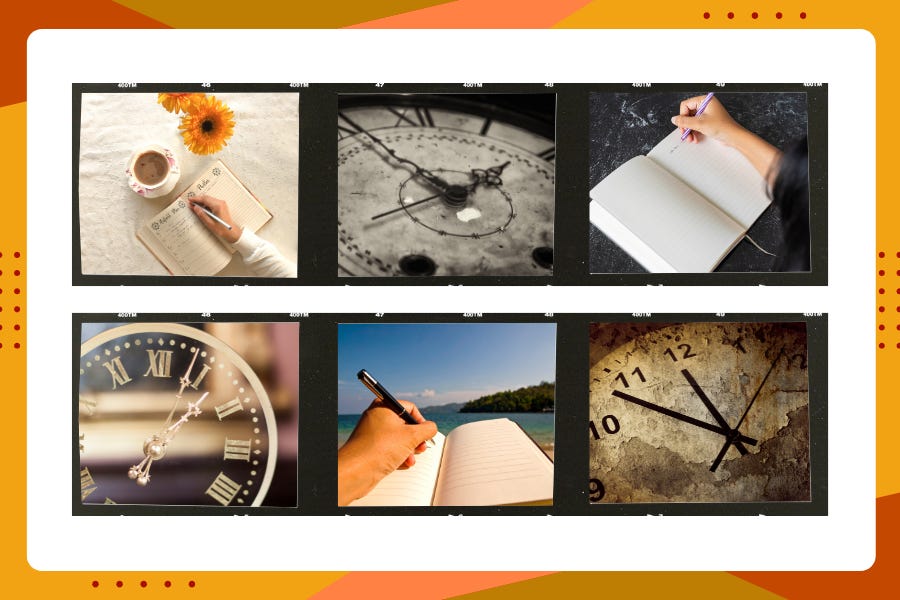
The house is still asleep when I write this. It is the hour before anyone needs anything from me, when the light outside has not decided whether it is still night or already morning. My coffee is too hot to drink, so I hold it, both hands around the mug, and let the heat soak into my palms. The notebook is open. The pen is already uncapped.
I set the pen on the page, and then something happens that I have spent years trying to describe. The room goes soft at the edges. The school lunches, the nine o’clock meeting, everything I owe the day, recedes like a tide pulling back from the shore. My hand moves before I have decided what to write. Twenty minutes pass and I do not feel one of them go by. When I look up, the coffee has gone cold, there are three pages in front of me I never planned, and I feel more like myself than I have in days.
That is flow.
For years I believed the problem was time. The real work needed a long empty afternoon that never arrived, so I waited. I waited for the vacation, the week off, the retreat that never materialized, the version of my life where the calendar finally cleared. And while I waited, I walked past the twenty minutes sitting in front of me every single morning.
What I got wrong
I treated flow as a question of how long. I grieved the hours I did not have and told myself the good work was waiting on the other side of a schedule I would never get.
It is a question of how often.
Every time you drop in, even for a few minutes, your nervous system learns the pattern a little better and recognizes the signal a little faster. The next session arrives sooner and lands deeper than the last one did.
We spend our energy mourning the long stretches we cannot find, while the thing that actually trains the state is repetition, and repetition is something even the most crowded life will hand you. The morning before the house wakes. The car in the school pickup line. The gap wedged between two meetings.
What is happening when you drop in
For a long time I thought flow was a mood, something that visited on the good mornings and skipped the bad ones. What I understand now is that it is a physical state, and your body recognizes it long before your mind can name it.
When you drop in, the part of your brain that monitors you and second guesses you goes quiet. That is why the voice asking whether you are doing it right finally stops. You are no longer thinking about the work. You are inside it. All the frayed threads of attention turn to point in the same direction, and your body reads that as safety. Safety is the condition flow needs before it will show up.
Mihaly Csikszentmihalyi, the psychologist who gave flow its name, described it as order in consciousness. That phrase has stayed with me for years. It is exactly what it feels like out in the parking lot with my notebook balanced against the steering wheel. Everything in me quietly lining up.
And that lining up does not need a long runway. It needs a familiar one.
The first ritual: a boundary
Flow answers to rituals you can build on purpose, and you can build them inside a life with no spare room in it. Mine are three, and each fits inside the twenty minutes you already have.
The first is a boundary. It sounds so obvious that most of us skip it. Put something physical around the moment. At home, for me, it is the phone left in the other room, one lamp turned on, and the mug of coffee already in my hand. On the mornings the house does not cooperate, it is the four closed doors of my car, engine off, nobody expecting me for another twenty minutes. The boundary does not have to be big. It has to be something your body can feel closing.
The second ritual: a threshold
The second is some small way of telling your body you are crossing over. For me it is the notebook and the uncapped pen, the one tactile thing my hands recognize as the sign that we are writing now. The specific object matters far more than you would guess, because your body reads it before your mind catches up.
The pen carries a second gift I did not choose it for. It cannot backspace. There is no cursor blinking at an unfinished sentence, no line I can restart six times over, so the only direction left is forward. Find the single gesture that tells your whole system the day can wait a few more minutes.
I should be honest about the start of each session, because it is rarely graceful. The first few minutes usually feel like resistance, like your whole body would rather be doing anything else. That reluctance is the toll you pay at the door. You sit through it, you keep the pen moving, and somewhere around minute three or four the work itself reaches up and pulls you under.
The third ritual: a sentence you leave unfinished
This one took me years to stumble into, and it is the one I would hand you first if I could.
End the session while you still have something left to say. Mid thought. Mid sentence, even, with the next line already forming in your head. Every instinct tells you to chase the thought down while you have it.
Leave it. When you walk away from a hanging thread, you are baiting the hook for tomorrow. You come back to a page that is already reaching for you, and the cold open, the hardest part of the whole thing, is simply gone. You taught your nervous system where to pick up, and it remembered.
Which is why the next morning you should not reread yesterday’s page. It feels like the responsible way to begin, a running start. It wakes the exact voice you came here to quiet, the one that judges and edits and asks whether any of this is good. You start correcting before you have started writing, and the blank page goes cold again. Begin forward instead, from the thread you left hanging.
Your turn
What is the first thing you reach for when you are ready to begin? Tell me in the comments, and give me the real version: the cold coffee you forgot to drink; the particular pen. The chair by the window that only you ever sit in. I want the small, ordinary, unglamorous thing that quiets the noise and hands you back to yourself.
P.S. If this stirred something, the Courage to Create Academy is where these twenty minutes become a whole method. Paid members get the full run of it, one page at a time.
👉 If you enjoy reading this post, feel free to share it with friends! Or feel free to click the ❤️ button on this post so more people can discover it on Substack.