

You won’t fail if you keep doing what you love,
but you will fail if you stop loving what you do.
My cursor hovered over the publish button for a solid forty-five seconds on my very first Substack post. Stomach tight. Jaw clenched. The question rattling around my head had nothing to do with grammar or headlines — it was uglier and simpler than that: What if nobody reads this?
That moment sticks with me, because we tend to frame courage in creative work as the grand gesture — quitting the corporate job, launching the book, going viral. The risks that pay off get all the attention. But there’s another version of courage that looks like walking into a room you built yourself and starting to speak when you have no idea if anyone showed up to listen.
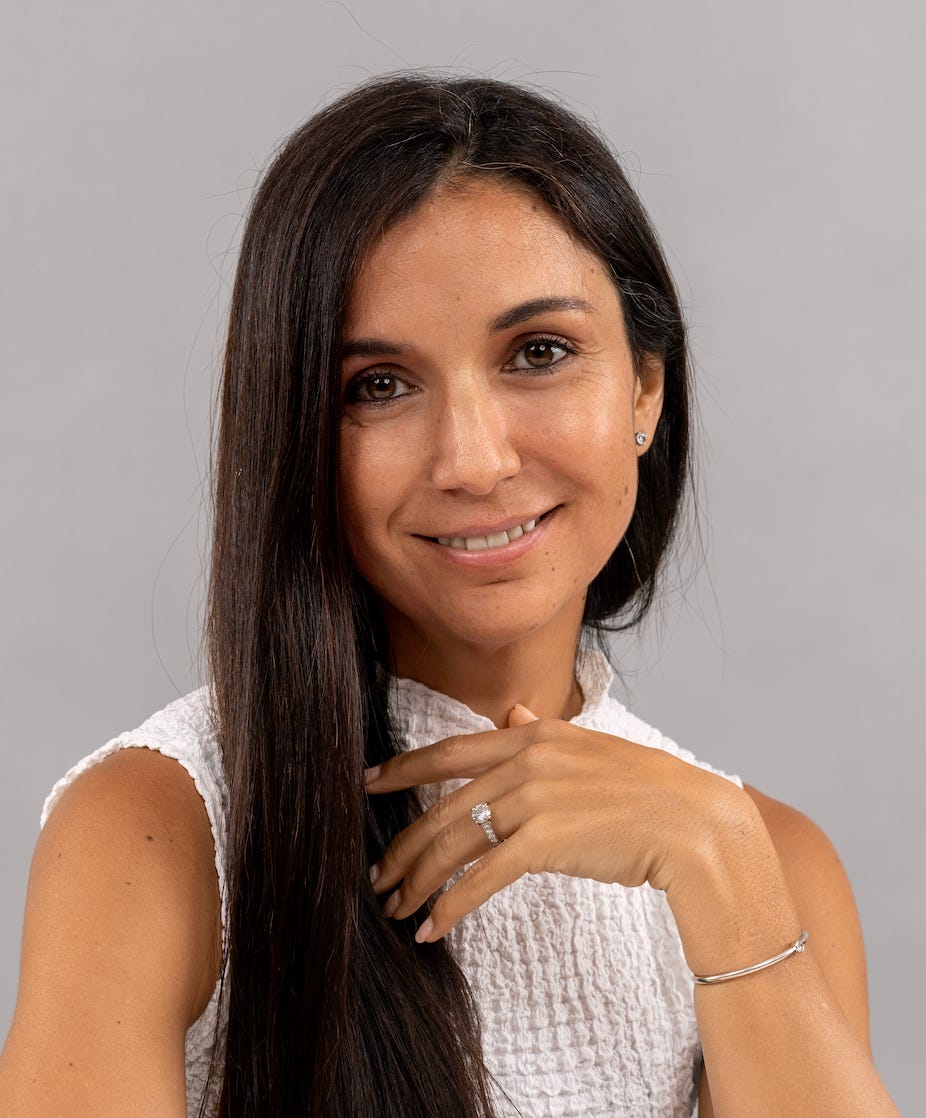
Veronica Llorca-Smith knows that version well.
How I found Veronica on Substack — honestly, I can’t remember. Our first Zoom call? Also a blur. (Sorry, Veronica — whatever we discussed, it clearly landed somewhere deeper than my short-term memory.) The feeling she left me with, though, I remember perfectly: touched, moved, and genuinely shaken in the best possible way. The kind of conversation where you close your laptop and just sit with it for a minute before the rest of your day rushes back in.
Within a week, I’d signed up as a founding member. My analytical brain usually needs more runway than that — I research, compare options, sit on decisions. Something about her writing bypassed the whole process.
So when I asked her to sit down for this interview, my questions were ready: the five published books, the public speaking career, the Substack Bestseller milestone. We covered some of that. The answer that stopped me cold, though, had nothing to do with any of it.
Here’s what happened. I asked Veronica about the biggest risk she’d taken building her Substack community. My assumption? She’d talk about money, or criticism, or the vulnerability of putting personal stories in front of strangers.
Instead:
“The biggest risk has been to show up, not knowing if there would be anyone on the other side.”
She went on: “When you publish a newsletter, you can comfortably hide behind the screen. But when you show up in a live session or a Mastermind, there’s no hiding anymore. The stage is all yours.”
And then the line that’s been rattling around my brain for days:
“The biggest risk has been to launch something new and show up with a smile, ready to perform even if the room is empty.”
My pen hit the table when she said that.
Because I know that feeling in my bones. Three people on a call I spent two weeks promoting. Registration numbers crawling for a workshop I poured myself into. Opening a Zoom room and sitting alone for two minutes that stretched into what felt like twenty — wondering if this whole thing was a colossal mistake.
We don’t talk about that part much. The viral post gets the screenshot. The subscriber milestone gets the celebration. Behind every one of those wins, though, sits a long stretch of rooms that barely filled, audiences that stayed mostly quiet, publish buttons pressed on a held breath.
What got me about Veronica’s answer is where she placed the courage. She didn’t treat those empty-room moments as obstacles she pushed through on her way to something better. For her, the showing up was the risk. The outcome was secondary.
Veronica grew up packing suitcases — Hong Kong marks the ninth place she’s called home. She left the corporate world at 40 during the pandemic and started building a life around writing and personal growth. Five published books followed. A thriving community. A Spanish-language Substack called El Limonero. International speaking stages.
Eight months into her Substack, though, she nearly walked away from all of it.
Growth had stalled. A plateau she couldn’t muscle through. The voice in her head kept getting louder.
What brought her back was clarity — not a tactic, not a growth hack. She returned to the original vision that got her started: building a community of people who want to turn their passion into their lifestyle. That vision anchored her when everything else screamed quit.
A few months after that low point, The Lemon Tree Mindset hit Substack Bestseller.
Since our conversation, one question keeps circling back: What separates the people who survive the empty-room phase from the people who don’t?
Talent doesn’t seem to be the deciding factor. I’ve watched gifted writers quit at 200 subscribers. Strategy doesn’t fully explain it either — Veronica didn’t crack some algorithm. She cracked something internal.
When I asked what advice she’d give someone who feels stuck, she skipped the productivity tips and content frameworks entirely. Her answer: “You don’t have to do it alone. Build your little tribe and cheer each other up along the way.”
Almost too obvious, right? But I’ve noticed that the advice we dismiss as basic is usually the advice we’re actively ignoring.
She also said something I keep turning over: “People are afraid of criticism. However, the worst critic often comes from within.” Followed by: “The worst-case scenario is not failing. It’s not trying.”
Sometimes I think about the version of me who nearly didn’t hit publish on that first post. She was afraid of the empty room — of writing into silence, of building something nobody wanted.
What Veronica’s story makes clear is that the empty room was never the worst-case scenario. Never opening the door was.
You show up and you start talking. Eventually someone walks in. Maybe it takes eight months, maybe longer. The room fills on its own timeline. Your only job is to still be standing there when it does.
Veronica Llorca-Smith wrote The Anti-Procrastinator: How Self-Awareness Can Change Your Life and Get You What You Want and runs The Lemon Tree Mindset on Substack, along with its Spanish counterpart, El Limonero. She helps people turn their passion into their lifestyle — and she keeps showing up even when the room is empty.
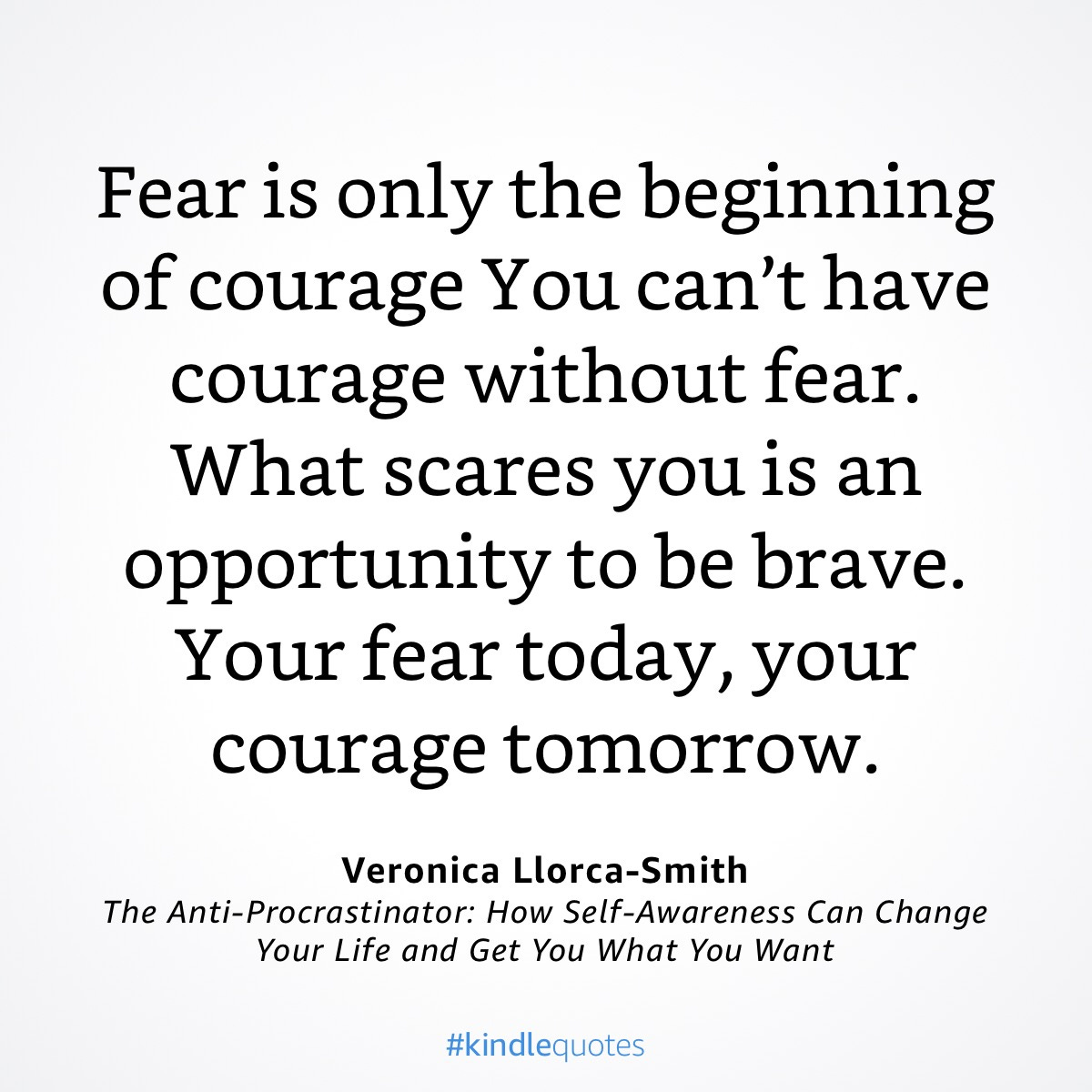
One of my favorite quotes on courage comes from Veronica Llorca-Smith latest book, “The Anti-Procrastinator: How Self-Awareness Can Change Your Life and Get You What You Want”
Veronica Llorca-Smith would love to hear from you. Feel free to reach out to her directly or check out her newsletter:

Or the Spanish version:
👉 If you enjoy reading this post, feel free to share it with friends! Or feel free to click the ❤️ button on this post so more people can discover it on Substack
Thank you so much for featuring me, Magdalena!
I love your series and what you are creating.
Wonderful interview between two writers who I know and appretiate separately from each other. Well done!