

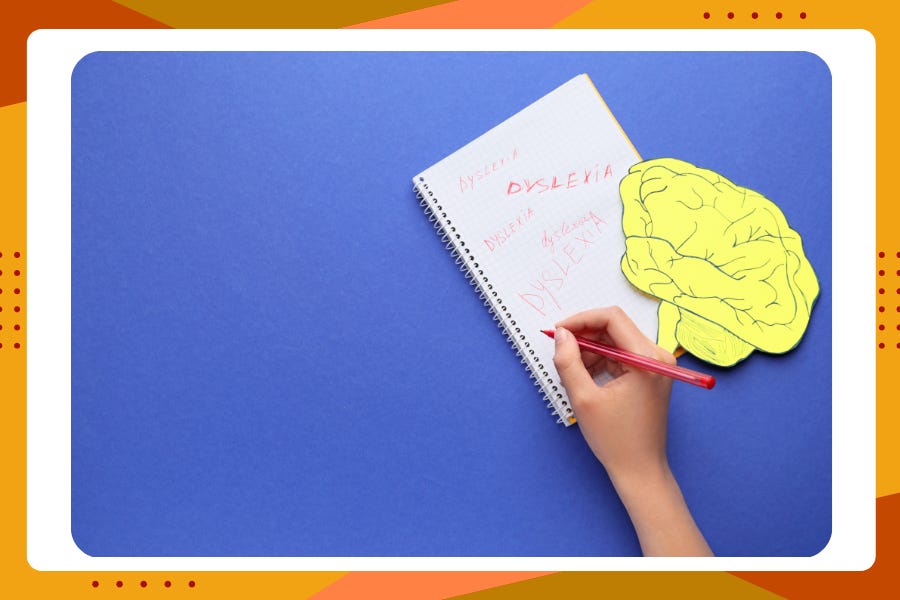
Your brain changed a little while you read that sentence.
Not in a lightning-bolt way. In the quiet, structural way it always does, by strengthening whatever you hand it to repeat. That is the whole idea of neuroplasticity, and most of the writing about it buries the hope under so much jargon that you close the tab before you reach the part that could actually change your week.
So here is the plain version. Your brain is not a fixed object you were handed at birth and have to live with for the rest of your life. It is a living system that reshapes itself around whatever you practice, pay attention to, and rehearse in your mind. The reshaping is happening right now, with or without your say-so. The only real question is whether it is wiring in your favor or quietly working against you.
I spent years not understanding this. I tried to change my life the way most of us are taught to, through willpower and good intentions and a vision board I propped against the kettle. None of it held, and I assumed the failure was mine. I was missing some discipline gene that other people clearly had.
What I actually understand now is that wanting to change was never the lever. I wish someone had told me that earlier. You can want a different life with your whole chest and your brain will not move an inch, because it does not respond to longing. It responds to repetition. Give it a sentence to rehearse, an action to repeat, and it will start building the road. Hand it nothing but the wish, and it builds nothing.
The woman who rebuilt her life from a parked car
There is a woman I think about often. A few decades ago she had stopped writing entirely (because her boyfriend at the time, told her that her writing sucked.) The silence had gone on so long she had quietly decided that whatever she once had was gone, and she was making her peace with a smaller version of her own life.
Then someone she loved ended up in a hospital bed, and she found herself sitting beside it for hours with nothing to do but think. So she started writing again. Not to launch anything. Just to survive the waiting.
When she went back to work, the only window she could find was the twenty minutes before her shift, in the car park, engine off, notebook balanced on the steering wheel. Other people were still asleep. She wrote anyway, in the cold, in handwriting only she could read.
She did this most mornings. Not because she felt inspired, because mostly she did not. She did it because she had decided that a person who writes is who she was going to be, and she gave her brain the daily evidence to believe it. The community she was writing for had fewer than a thousand people in it. Eighteen months later it was approaching seven thousand.
The woman was me, and I am not telling you this to be inspiring. I am telling you because nothing about that climb came from a burst of motivation. It came from a tired person repeating a small action long enough that her brain stopped treating it as a stretch and started treating it as her. That is neuroplasticity doing exactly what it does. It just happened to be pointed in a useful direction for once.
Your brain is already scripting your life. The question is who is holding the pen.
Here is the part people misunderstand. Neuroplasticity is not a setting you switch on when you finally get serious. It has been running since before you could speak, and if you have never thought about it on purpose, it has most likely been working against you.
Right now your brain is wiring itself around what you focus on and how you react, hour by hour. There is a structure near the base of it called the reticular activating system whose job is to filter the firehose of the world down to whatever it has decided matters. Buy a particular car and you suddenly see it on every road. Decide quietly that you are the kind of person who never finishes things, and your brain will dutifully collect the evidence to prove you right.
So you are already scripting your life. You are simply doing it by accident, in the dark, in whatever direction your oldest habits point. The work is not to start scripting. The work is to take the pen.
You act your way into the identity, not the other way round
Most people wait. They wait to feel like a writer before they write, to feel like an entrepreneur before they build, to feel ready before they begin. They treat identity as a door that opens on its own once enough time has passed.
Your brain does not work in that order. The daily action comes first, and the identity catches up to it. Every morning I sat in that car and wrote, I was not expressing an identity I already had. I was casting a vote for one I did not believe in yet. The belief arrived later, dragged into place by the evidence.
This is the third step of the method I have spent years building and testing, which I call Future Scripting. You see the finished thing in your mind’s eye. You write it down by hand, in detail, in the present tense. Then you act as though it has already happened. The acting hands your brain the behavior now, so the wiring has something real to build on, rather than asking it to wait politely until you feel different.
The map of who you are is written in pencil, not ink. You get to rub things out and draw new roads. The drawing is done with your hands and your days, not your hopes.
The part people quietly resist
There is a piece of this I resisted for years, so I will say it gently.
You have to do the thing before it feels good. The first mornings in that car were not transcendent. They were cold and awkward and full of the suspicion that I was wasting twenty minutes I could have spent asleep. The new pathway always feels effortful, because it is new, because the brain has not laid the road yet. That discomfort is the feeling of the wiring being built.
Errors are part of it too. The brain learns most from getting things slightly wrong and adjusting, which means a string of imperfect mornings is doing more for you than waiting for the perfect conditions ever could. The people who change are not the ones who feel ready. They are the ones willing to be clumsy in public for longer than is comfortable.
Neuroplasticity runs in reverse too
Everything I have described works just as well in the wrong direction, and this is the part I find most sobering.
Chronic stress rewires you. Replay a worst-case scenario enough times and your brain gets genuinely excellent at producing dread, because you have been practicing dread without realizing it. There is a network in the brain that switches on whenever you stop concentrating, sometimes called the default mode network, and for a lot of us it spends its idle hours rehearsing the same anxious loops and old humiliations. That is Future Scripting too. It is just scripting a future you would never consciously choose.
So when you scroll first thing every morning, you are training distraction. When you narrate your own life as a series of things that keep happening to you, you are wiring helplessness. The brain is not wise. It does not check whether a pathway is good for you before it strengthens it. It strengthens whatever you repeat, full stop.
Once you really absorb that, a lot of the world starts to make sense. The reason a certain mood feels permanent is that you have practiced it for years. The good news folded inside that is the same fact running the other way. What was built by repetition can be rebuilt by repetition.
How to put the pen back in your own hand
I will keep this simple, because the brain does not reward complexity. It rewards frequency.
1. Choose the behavior, not the outcome. “Build a thriving newsletter” is a wish your brain cannot act on. “Write for twenty minutes before anyone else is awake” is a behavior it can repeat. Pick the smallest honest action that belongs to the person you want to become.
2. Write it down by hand, in the present tense, in detail. This is where the method earns its name. Your nervous system believes what you write in detail, and the act of forming the words by hand makes the future specific enough that the brain treats it as something to move towards rather than a vague someday. Your pen is your permission slip.
3. Act as though it has already happened. Take one action today that the future version of you would take. Send the thing. Take micro-action. Show up as her. Every action feeds the wiring. Write it first. Live it second.
4. Repeat it long enough for the road to set. The principle underneath all of this is one Donald Hebb described decades ago, usually summarised as neurons that fire together wire together. The catch is timing. Week one feels like friction. By week three it feels familiar. Somewhere after that it starts to feel automatic, and most people quit in the gap before that point, right as the road was about to hold. If it still feels hard, that is not failure. That is construction.
The question underneath all of it
Neuroplasticity is not new and I did not discover it. It has been running your life since the day you were born, shaping you around whatever you happened to repeat.
So the comfortable question, whether you can change, is the wrong one. You can. That was never in doubt. The harder and more useful question is the one I had to sit with in that cold car years ago:
What am I rehearsing every day without realizing it?
Because you are training your brain into something right now, this morning, with whatever you reached for first. You may as well do it on purpose, so pick up the pen and start now.
P.S. If this stirred something, the Courage to Create Academy is where the method gets taught in full. It is where you learn to read what your everyday spaces are teaching your brain to repeat, then rewrite it on purpose. Paid members get the full run.
“The silence had gone on so long she had quietly decided that whatever she once had was gone, and she was making her peace with a smaller version of her own life.”
This really touched a raw nerve. It made me wonder how many women had ditched, dreams, hopes and ideas that could have been life giving, life changing and so beneficial to humanity, just because someone made a careless and inconsiderate remark.
I’m so glad that you started writing again and built the muscles for it all over again . Today I got to read your take on neuroplasticity because you dared to write again. I love the way that you explained it. Thank you for sharing parts of your story with us. 🧡🙏🏽
When that story started, I thought it was someone else's. But in the end, when I read that it was yours, I couldn't describe that moment, my happiness. I loved reading it, or should I say I enjoyed it thoroughly. You are indeed a great writer, Magdalena ♥️