

"I want to tell you that curiosity slipped away from me. That it's one of those things the years take quietly, the way they take your knees and your patience. That would be the kinder story. It would also be a lie." My mentor said this to me this morning, and it made me set my coffee down.
The slow fade of wanting to know, that flat disinterest that arrives so quietly in midlife you mistake it for finally being grown up, is one of the things researchers have started to treat as an early signal, the loss of curiosity showing up before other changes do.
I asked her to say it again.
Then I looked at the desk and tried to remember the last real question I had asked, and the silence in my own head frightened me. A small child asks something like seventy-six questions an hour. I could not manage one from the top of my head.
Maybe you read that and think curiosity is just a temperament. Either you were dealt it or you were not, and somewhere back there you used it up. You are a practical person now, and tired, and that ship has sailed.
I thought exactly that. I had quietly filed myself under “used to be curious, now mostly busy.”
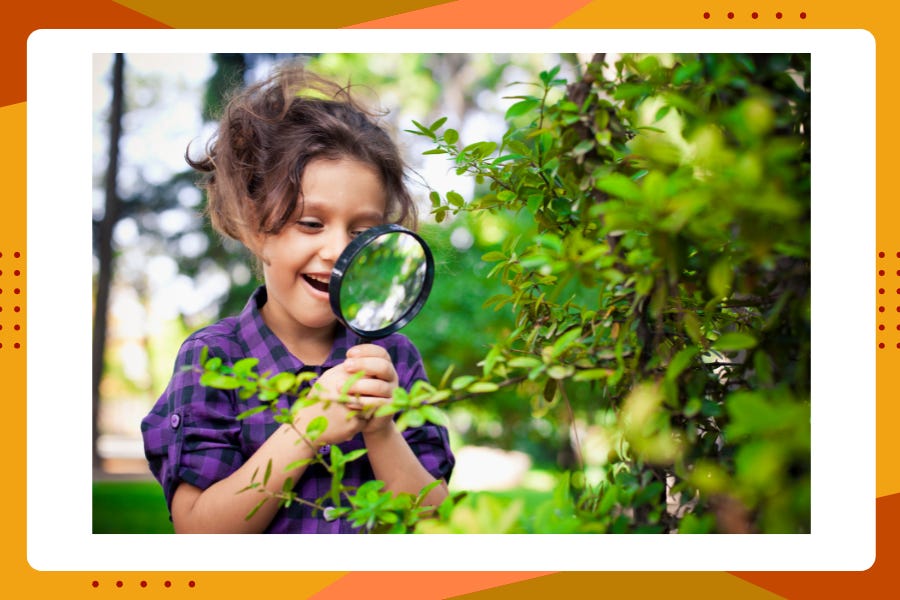
I used to be the kid with the seventy-six questions. My grandmother stood at the counter with flour on her forearms and I stood at her elbow, asking why the dough had to rest, why the resting mattered, what the dough was resting from. She never once told me to stop. She answered, or she gave me two words I have only recently understood.
We will see.
Somewhere I lost that kid. I did not decide to. She thinned out, the way she does for most of us, until wondering became a thing I used to do before there was so much to get done.
The turn came on an ordinary morning, which is the only kind I get. I wrote a single question at the top of the page, a real one with a real gap behind it, and instead of opening email I followed it for twenty minutes. Nothing mystical happened. But I stood up with three things I had not had when I sat down, and a specific kind of awake I had been missing for years. So I went looking for the reason.
It is not a verdict. It is a door.
Here is the line I want to draw, because it is the whole essay.
Researchers separate two kinds of curiosity, and the difference between them is the difference between a sentence handed down and a door left open.
Trait curiosity is the broad background hum, your general appetite for the new. That one does tend to fade across adult life. If it were the whole story, the practical-and-tired diagnosis would be right, and you could close this and go answer your email.
There is a second kind. State curiosity is the pull of one specific question, one particular thing that genuinely grabs you. A UCLA team led by the psychologist Alan Castel found that state curiosity does not have to decline at all. It dips in midlife and then climbs, well into old age, in the people who keep following what actually interests them rather than what they decided they were supposed to care about.
So the fade is real. It is just not a sentence. You did not lose the capacity. You lost the practice. And practice is the one thing you can pick back up at this desk, this week.
Castel put the why of it in a way I have not been able to shake. As we get older, he suggests, we become more selective, more willing to spend our attention only on what matters and let the rest go. Curiosity stops being a luxury for people with spare time. It becomes the filter that tells an aging mind where to point. It may be one of the quiet things that decides how sharp you stay.
What that question is doing to your brain
Once I knew the door was real, I wanted to know what opens when you walk through it.
When you get genuinely curious, you do not only remember the thing you were chasing. You remember whatever happened to be standing nearby. The song that was playing. The smell of the room. The offhand thing a friend said while you were lit up. Matthias Gruber and Charan Ranganath, who studied this at UC Davis, found out why.
They put people in scanners while they waited to learn answers to trivia they were itching to know, and the hippocampus lit up, the same region you depend on to lay down new memories, firing right alongside the reward centers that respond to food and warmth.
Your brain treats wanting to know as its own small pleasure, and while the lights are on, it records whatever else is in the room. Gruber called curiosity a vortex, pulling in the target and everything around it.
It is why the things you know best are usually the ones you stumbled into sideways, chasing something that fascinated you. A single real question, followed for twenty minutes, does not only answer itself. It widens the aperture on the whole morning.
The twenty-minute door
You have heard me say your pen is your permission slip enough times that you can hear my voice doing it. Here is how the pen and the wondering feed each other.
When you write a real question down, the kind with a genuine gap behind it, your brain starts hunting the answer whether you asked it to or not. An open question itches, and you close the gap by finding out. That same reward system from the scanner does one more thing worth knowing. It fires not just for the answer but for the advance notice, for simply finding out what is coming.
Your nervous system is built to lean toward the future, which is the whole premise of writing the life you want before you live it. Twenty minutes is enough to start the itch, and it is the window most of us can actually defend. You can guard twenty minutes the way you guard a parking spot.
The practice is four steps, and it is the whole experiment I want to run with you in June.
Set a timer for twenty minutes, before the day decides what it wants from you.
By hand, finish this sentence. I am genuinely curious to find out ______. Make it a real gap, not a question you already know the answer to.
Follow it. One rabbit hole, wherever it goes. Do not make it useful. Make it interesting.
Tomorrow, do it again with a new question.
Some mornings the question will be small. Why do I dread Tuesdays. Some mornings it will be enormous. What would I build if I trusted myself. The size is not the point. The asking is the practice, and the practice is the thing that climbs. Thirty mornings, twenty minutes each, one real question a day. I am calling it a curiosity experiment because I genuinely do not know what it will turn up, which is the most honest thing I can tell you about it.
Before I let you go
Finish the sentence in the comments. I am genuinely curious to find out ______. Just the question, you do not need the answer, that is rather the point. I read every single one, and at the end of June I will gather the themes into a post so you can see what a few thousand reawakened minds are reaching toward.
(And if someone you love has been calling themselves practical and tired, send this their way. It might be a truer word for what they are feeling, and a gentler one.)
The kid who asked seventy-six questions an hour is still in there. In you, and in me. She did not leave. She went quiet because somewhere we taught her that knowing was safer than wondering, and I would like to spend June proving her wrong.
Write it first. Live it second.
I will see you at the desk.
I am genuinely curious to find out how I can meet and make new friends.
I am genuinely curious about how practicing curiosity might impact the anxiety that often accompanies uncertainty for so many people.